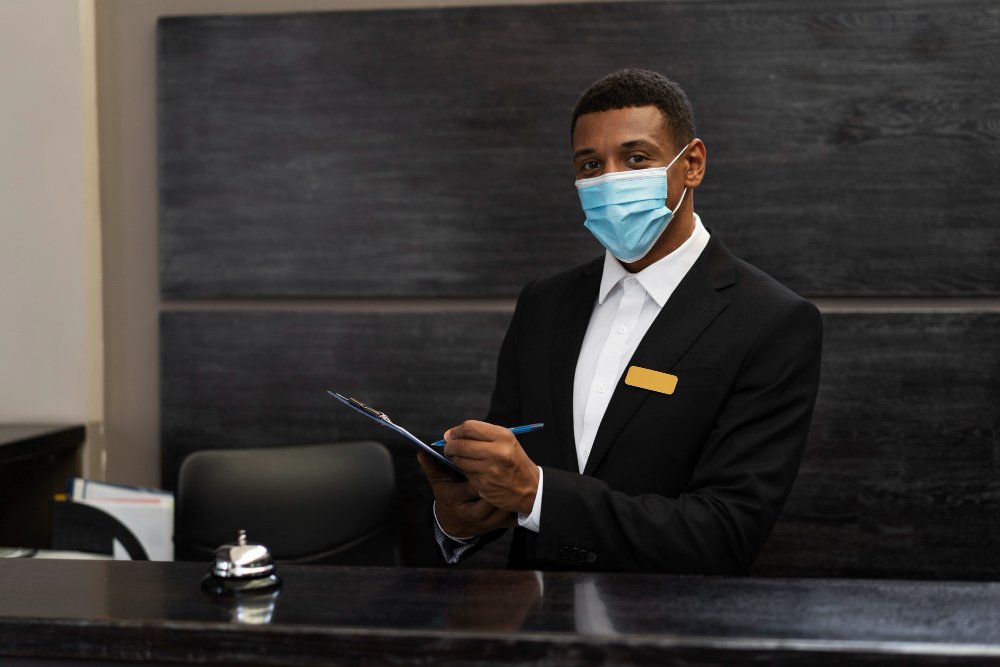
If you’ve been wondering whether it’s genuinely possible to work in Canada’s thriving hospitality industry earning CAD $35,000-$65,000+ annually (approximately USD $26,000-$48,000+) with full employer sponsorship through the LMIA (Labour Market Impact Assessment) program, comprehensive benefits, and a clear pathway to permanent residence, I’m here to tell you—it’s not only possible, it’s actively happening right now for qualified hospitality professionals from the Philippines, India, Nigeria, Kenya, the Caribbean, and countries worldwide.
Canada’s hospitality and tourism sector is experiencing a critical labor shortage, with an estimated 80,000+ unfilled positions across hotels, resorts, restaurants, and tourism facilities according to the Tourism Industry Association of Canada. The combination of pandemic-related workforce exodus, tourism rebound, and retiring Baby Boomers has created unprecedented opportunities for international hospitality workers across all levels—from front desk associates to hotel managers, housekeeping supervisors to food and beverage directors.
But here’s what most people don’t know: securing hotel jobs in Canada with visa sponsorship through the LMIA program isn’t just about having hospitality experience. You need to understand which positions qualify for work permits, how the LMIA process differs for the hospitality sector, which provinces and cities have the highest demand, and how to position yourself for both immediate employment and long-term permanent residence through Provincial Nominee Programs (PNPs) that prioritize hospitality workers.
Over the next several minutes, I’m going to walk you through everything—from the exact LMIA requirements for hotel positions to specific hotel chains and independent properties actively sponsoring foreign workers right now, realistic salary expectations by position and region (including tips where applicable), the step-by-step application process including how to find legitimate opportunities, the true costs involved (work permit fees, travel, settlement), and how to transition from temporary worker to permanent resident within 1-3 years.
This isn’t generic information from job boards. This is practical, field-tested guidance from someone who has helped numerous hospitality professionals successfully navigate the journey to Canadian hotel employment and permanent residence.
Let’s begin.
Why Canada is Desperately Hiring Foreign Hospitality Workers in 2025
Canada’s hospitality labor shortage isn’t a temporary post-pandemic phenomenon—it’s a structural crisis intensifying as tourism rebounds to record levels while the domestic workforce shrinks.
According to Statistics Canada and industry associations, the accommodation sector (hotels, resorts, lodges) faces vacancy rates of 10-15%, with some regions experiencing even more severe shortages. This translates to approximately 30,000-40,000 unfilled hotel positions alone, not including restaurants, attractions, and related tourism services.
The Perfect Storm Creating Massive Opportunity
1. Tourism Explosion: International tourism to Canada reached near-record levels in 2024 and continues growing. Major events (World Cup 2026 in multiple Canadian cities), increasing international students, and growing domestic travel are driving accommodation demand through the roof.
2. Pandemic Workforce Exodus: During COVID-19, thousands of hospitality workers left the industry permanently for other sectors. Even as tourism rebounds, these workers haven’t returned, creating a massive labor gap.
3. Aging Workforce: The average age of Canadian hotel workers is increasing, with significant retirements in management and supervisory positions. Replacement pipelines are insufficient.
4. Low Unemployment Means Competition: Canada’s overall unemployment rate remains low (around 5-6%), meaning employers across all sectors compete for workers. Hospitality struggles to attract Canadians when other industries offer similar or better pay with more regular hours.
5. Geographic Challenges: Tourist destinations (Banff, Whistler, Niagara Falls, PEI) face extreme housing shortages and high costs, making it difficult to attract Canadian workers. International workers often more willing to accept employer-provided accommodation and remote locations.
6. Seasonal Intensity: Summer and winter tourism peaks require surge staffing that domestic labor pool cannot provide, especially in resort communities.
Government Recognition and Support
Hospitality Workers in Immigration Priorities: While not always on the federal Shortage Occupation List, hospitality positions are prioritized in several Provincial Nominee Programs, particularly in tourism-dependent provinces like British Columbia, Alberta, and Atlantic provinces.
What this means for you: Provincial governments actively want hospitality workers and offer streamlined pathways to permanent residence for those working in their tourism sectors. Many paths to PR for hotel workers are faster than for other occupations.
LMIA Facilitation: Employment and Social Development Canada (ESDC) recognizes genuine labor shortages in hospitality and processes LMIAs for legitimate hotel positions, especially in tourism regions and for positions requiring specialized skills or management experience.
Provincial Support Programs: Some provinces offer housing support, transportation assistance, and settlement services specifically for hospitality workers in tourism regions.
The truth is: Canadian hotels, resorts, and hospitality businesses aren’t just accepting international workers as a last resort—they depend on them to maintain operations, especially in tourist destinations where local labor simply doesn’t exist in sufficient numbers.
Regional Demand Hotspots
British Columbia (Vancouver, Whistler, Victoria, Kelowna):
- Massive tourism industry
- Severe housing challenges but highest wages
- Salaries: CAD $35,000-$60,000
- BC PNP strong pathway for hospitality workers
Alberta (Banff, Lake Louise, Jasper, Calgary):
- Mountain resort communities desperate for workers
- Often provides staff accommodation
- Salaries: CAD $32,000-$55,000
- Beautiful locations, adventure lifestyle
Ontario (Toronto, Niagara Falls, Ottawa, Muskoka):
- Largest hotel market in Canada
- Year-round demand
- Salaries: CAD $33,000-$58,000
- Niagara Falls particularly welcomes international workers
Quebec (Montreal, Quebec City, Mont-Tremblant):
- Growing tourism sector
- French language advantage (but not always required)
- Salaries: CAD $30,000-$52,000
- Lower cost of living than Toronto/Vancouver
Atlantic Canada (Nova Scotia, PEI, New Brunswick, Newfoundland):
- Tourism boom in recent years
- Atlantic Immigration Program (AIP) – fastest PR pathway
- Salaries: CAD $28,000-$48,000
- Most affordable region, welcoming communities
Saskatchewan & Manitoba (Winnipeg, Regina, Saskatoon):
- Urban hotels + growing tourism
- Lower cost of living
- Salaries: CAD $28,000-$45,000
- Fast PR pathways through PNPs
Yukon/Northwest Territories:
- Remote tourism operations
- Premium wages for remote work
- Salaries: CAD $38,000-$65,000+
- Adventure lifestyle, tight-knit communities
Pro Tip: The Atlantic provinces (particularly Nova Scotia and PEI) and smaller BC communities (Kelowna, Kamloops, Penticton) offer the best combination of genuine labor shortages (easier to get LMIA), affordable cost of living, employer support (often including accommodation), and fastest pathways to permanent residence through provincial programs specifically designed for hospitality workers. While Banff and Whistler are glamorous destinations, the competition is fiercer and housing costs are crushing unless employers provide accommodation.
Real Salary Expectations: What You’ll Actually Earn
Let me break down honest numbers by position because hotel salaries vary significantly based on role, experience, location, and hotel type (luxury vs. budget, chain vs. independent).
Entry-Level Positions
Front Desk Agent/Receptionist:
- Annual Salary: CAD $28,000-$38,000 (USD $21,000-$28,500)
- Hourly Rate: CAD $14-$18/hour
- Tips: Minimal in Canada (unlike some countries)
Housekeeping Room Attendant:
- Annual Salary: CAD $27,000-$35,000 (USD $20,000-$26,000)
- Hourly Rate: CAD $14-$17/hour
- Often: Employer-provided accommodation in resort areas
Food & Beverage Server:
- Annual Salary: CAD $26,000-$34,000 base (USD $19,500-$25,500)
- Hourly Rate: CAD $14-$16/hour + tips
- Tips: Can add CAD $5,000-$15,000 annually in busy properties
- Total Compensation: CAD $32,000-$48,000
Kitchen Helper/Prep Cook:
- Annual Salary: CAD $28,000-$36,000 (USD $21,000-$27,000)
- Hourly Rate: CAD $14-$17/hour
Mid-Level Positions
Front Desk Supervisor:
- Annual Salary: CAD $35,000-$48,000 (USD $26,000-$36,000)
- Hourly Rate: CAD $17-$23/hour
- Often: Includes benefits, bonuses
Housekeeping Supervisor:
- Annual Salary: CAD $33,000-$45,000 (USD $24,500-$33,500)
- Hourly Rate: CAD $16-$22/hour
Restaurant Supervisor/Host:
- Annual Salary: CAD $32,000-$44,000 (USD $24,000-$33,000)
- Hourly Rate: CAD $15-$21/hour
Chef de Partie/Line Cook:
- Annual Salary: CAD $35,000-$48,000 (USD $26,000-$36,000)
- Hourly Rate: CAD $17-$23/hour
Night Auditor:
- Annual Salary: CAD $32,000-$42,000 (USD $24,000-$31,500)
- Hourly Rate: CAD $15-$20/hour
- Night premium: Often 10-15% extra
Management & Specialized Positions
Assistant Front Office Manager:
- Annual Salary: CAD $40,000-$55,000 (USD $30,000-$41,000)
- May include: Performance bonuses
Rooms Division Manager:
- Annual Salary: CAD $45,000-$65,000 (USD $33,500-$48,500)
Food & Beverage Manager:
- Annual Salary: CAD $45,000-$65,000 (USD $33,500-$48,500)
Executive Housekeeper:
- Annual Salary: CAD $42,000-$58,000 (USD $31,500-$43,500)
Executive Chef/Sous Chef:
- Annual Salary: CAD $45,000-$70,000 (USD $33,500-$52,500)
General Manager (small-mid size property):
- Annual Salary: CAD $55,000-$85,000+ (USD $41,000-$63,500+)
- May include: Bonuses, accommodation, vehicle
Revenue Manager:
- Annual Salary: CAD $50,000-$75,000 (USD $37,500-$56,000)
Here’s the thing: Hotel compensation often includes significant non-salary benefits that improve your overall financial position: employee meals (can save CAD $300-500/month), employer-provided accommodation in resort areas (saves CAD $800-1,500/month), health benefits after probation, staff discounts on hotels worldwide, and overtime opportunities during busy seasons.
Additional Compensation Components
Tips & Gratuities (Where Applicable):
- Front desk: Minimal (CAD $500-2,000/year)
- Servers: Significant (CAD $5,000-15,000/year)
- Bartenders: Substantial (CAD $8,000-20,000/year)
- Valets/Bell staff: Moderate (CAD $3,000-8,000/year)
- Housekeeping: Minimal in Canada (CAD $500-1,500/year)
Overtime Pay:
- Time-and-a-half after 40-44 hours (varies by province)
- Common during peak seasons
- Can add 10-20% to annual earnings
Accommodation Value:
- Employer-provided housing: Saves CAD $8,000-18,000/year
- Common in: Banff, Whistler, Jasper, resort areas
- Often shared accommodation but significant savings
Meals:
- Staff cafeteria or meal allowances
- Value: CAD $200-400/month (CAD $2,400-4,800/year)
Take-Home Pay After Canadian Taxes
Understanding your net income (varies by province):
CAD $35,000 Gross in Ontario:
- Federal/provincial tax: ~$5,000
- CPP/EI: ~$2,500
- Net annual: ~$27,500 (CAD $2,290/month)
CAD $45,000 Gross in British Columbia:
- Federal/provincial tax: ~$7,500
- CPP/EI: ~$3,000
- Net annual: ~$34,500 (CAD $2,875/month)
CAD $55,000 Gross in Alberta:
- Federal/provincial tax: ~$9,500
- CPP/EI: ~$3,500
- Net annual: ~$42,000 (CAD $3,500/month)
Use official CRA (Canada Revenue Agency) calculators for personalized estimates by province.
Comparison Table: International Hospitality Salaries
| Country | Entry Hotel | Supervisor | Manager | Notes |
|---|---|---|---|---|
| Canada | CAD $28K-$38K | CAD $35K-$48K | CAD $45K-$65K | Plus benefits, PR pathway |
| USA | USD $25K-$35K | USD $35K-$50K | USD $50K-$85K | Tips culture, no PR pathway |
| UK | £18K-£25K | £25K-£35K | £35K-£55K | Lower wages, higher costs |
| Australia | AUD $45K-$55K | AUD $55K-$70K | AUD $70K-$95K | High wages, high costs |
| UAE | AED 36K-60K | AED 60K-90K | AED 90K-180K | Tax-free but temporary |
| Caribbean | USD $18K-$28K | USD $28K-$40K | USD $40K-$65K | Tips, tourism-dependent |
Note: Canada offers excellent balance of reasonable wages, comprehensive benefits (healthcare, pension), manageable cost of living outside major cities, and clearest pathway to permanent residence for hospitality workers compared to other developed countries.
Top Hotel Chains & Companies Offering LMIA Sponsorship
This is where it gets practical. I’m sharing actual hotel companies and chains with proven records of hiring international workers through LMIA.
Major International Hotel Chains
1. Marriott International (Multiple Brands)
- Brands: Marriott, Westin, Sheraton, Courtyard, Fairfield Inn, Delta Hotels
- Locations: Major cities and tourist destinations Canada-wide
- International Hiring: Established LMIA processes
- Positions: Front desk, housekeeping, F&B, management
- Average Salary: CAD $30,000-$55,000 depending on position
- Website: careers.marriott.com (filter by Canada)
2. Hilton Hotels & Resorts
- Brands: Hilton, DoubleTree, Hampton Inn, Hilton Garden Inn
- Locations: Urban and resort properties across Canada
- LMIA Experience: Regular international recruitment
- Positions: All departments
- Average Salary: CAD $28,000-$58,000
- Website: jobs.hilton.com
3. Accor Hotels
- Brands: Fairmont, Novotel, Sofitel, Ibis
- Fairmont Banff Springs & Chateau Lake Louise: Major employers of international workers
- LMIA Support: Particularly in resort properties
- Often Includes: Staff accommodation
- Average Salary: CAD $30,000-$60,000
- Website: careers.accor.com
4. IHG (InterContinental Hotels Group)
- Brands: Holiday Inn, Crowne Plaza, InterContinental, Kimpton
- Locations: Urban centers across Canada
- International Workers: Common in their Canadian properties
- Average Salary: CAD $28,000-$56,000
- Website: ihg.com/hotels/us/en/global/careers
Canadian Hotel Chains & Independent Operators
5. Best Western Hotels & Resorts
- Extensive Network: Many franchised properties across Canada
- LMIA Friendly: Individual properties often sponsor workers
- Smaller Properties: Often easier to secure personal attention from owner/GM
- Average Salary: CAD $27,000-$50,000
- Strategy: Apply directly to individual properties
6. Coast Hotels (APA Hotels)
- Western Canada Focus: BC, Alberta, Yukon
- Known For: Hiring international workers
- Locations: Including remote/resort areas
- Average Salary: CAD $30,000-$52,000
- Website: coasthotels.com/careers
7. Sandman Hotel Group
- Western Canadian Chain: Hotels across BC, Alberta, Saskatchewan
- Family-Owned: Often flexible with international hiring
- Average Salary: CAD $28,000-$50,000
- Website: sandmanhotels.com/careers
Resort & Destination Properties
8. Pursuit Collection (Banff, Jasper, Alaska)
- Mountain Resorts: Operates iconic properties in Canadian Rockies
- Major International Employer: Hundreds of foreign workers annually
- Includes: Accommodation, often meals
- Positions: All levels, all departments
- Average Salary: CAD $28,000-$52,000 + accommodation value
- Website: workinhospitality.com
9. Vail Resorts (Whistler Blackcomb)
- Whistler, BC: Major ski resort employer
- Seasonal & Year-Round: Both types of positions
- International Program: Established J-1 and work permit programs
- Average Salary: CAD $30,000-$55,000
- Website: vailresortscareers.com
10. Great Wolf Lodge (Niagara Falls, other locations)
- Waterpark Resorts: Family entertainment properties
- Niagara Falls: Major tourist destination, regular international hiring
- Positions: Wide variety across departments
- Average Salary: CAD $28,000-$50,000
- Website: careers.greatwolf.com
Boutique & Independent Hotels
11. Relais & Châteaux Properties
- Luxury Independent Hotels: Various Canadian locations
- Chef Positions: Particularly seek international culinary talent
- Higher-End Salaries: CAD $35,000-$70,000
- Often: Include accommodation
12. Independent Boutique Hotels
- Growing Sector: Unique properties in tourist cities
- Owner-Operated: Sometimes more flexible with sponsorship
- Strategy: Research Trip Advisor top-rated hotels, apply directly
- Variable Salaries: CAD $28,000-$58,000
Regional Hotel Associations & Groups
Hotel Association of Canada (HAC) Members:
- Many member hotels open to international workers
- Check provincial hotel associations for members
- Example: British Columbia Hotel Association, Ontario Restaurant Hotel & Motel Association
Seasonal Operations (Strong LMIA History)
13. Prince Edward Island Tourism Operations
- Summer Season: Massive demand May-October
- International Workers: Essential to operations
- Atlantic Immigration Program: Fastest PR pathway
- Average Salary: CAD $27,000-$45,000
- Often: Includes accommodation
14. Muskoka Resort Hotels (Ontario)
- Summer Cottagelands: North of Toronto
- Seasonal Resorts: Hire internationally for peak season
- Beautiful Location: Lake country
- Average Salary: CAD $28,000-$48,000
Here’s what most people don’t know: Smaller independent hotels and regional chains in tourist destinations often provide the fastest path to LMIA approval because they face the most severe labor shortages and have less bureaucracy than major chains. A 50-room independent hotel in Niagara Falls or a boutique property in Charlottetown, PEI may process your LMIA in 6-8 weeks, while a major urban chain hotel might take 12-16 weeks and face more applicant competition. Cast your net widely geographically.
Pro Tip: The “sweet spot” for LMIA hospitality positions is properties with 40-150 rooms in mid-sized tourist cities (Kelowna, Charlottetown, Niagara Falls, Canmore, Kamloops, Fredericton). They’re large enough to have formal HR processes and financial stability to sponsor workers, but small enough that you’re not competing with hundreds of other applicants. They also typically face genuine local labor shortages that make LMIA approval more straightforward. Major urban luxury hotels get overwhelmed with applications; tiny 20-room B&Bs may lack experience with LMIA process.
I’ll continue with the remaining sections of the hotel management article.
Understanding the LMIA Process for Hotel Workers
The Labour Market Impact Assessment (LMIA) is the cornerstone of working in Canadian hospitality. Let me break down exactly how it works for hotel positions.
What is an LMIA for Hospitality Workers?
An LMIA is a document issued by Employment and Social Development Canada (ESDC) that an employer must obtain before hiring a foreign worker. For hotel positions, it proves:
- A genuine labor shortage exists for the specific position
- No qualified Canadian or permanent resident is available
- Hiring a foreign worker won’t negatively impact the Canadian labor market
- The employer will pay prevailing wage rates
- The employer meets recruitment requirements
LMIA Categories for Hotel Workers
High-Wage Positions:
- Paying above the provincial/territorial median hourly wage
- Most management and supervisory positions
- Some specialized chef positions
- Standard LMIA process
Low-Wage Positions:
- Paying below the provincial/territorial median wage
- Entry-level front desk, housekeeping, food servers
- Additional employer requirements (transition plan, cap on low-wage workers)
- Still viable pathway but different process
Median Wages by Province (2024 approximate):
- British Columbia: CAD $27.00/hour
- Alberta: CAD $28.00/hour
- Ontario: CAD $27.00/hour
- Quebec: CAD $25.00/hour
- Atlantic provinces: CAD $22.00-24.00/hour
Positions above these thresholds = high-wage; below = low-wage.
Employer’s LMIA Requirements
What Employers Must Do:
1. Recruitment Efforts (Minimum 4 weeks):
- Post on Job Bank (Canada’s national employment website)
- Two additional recruitment methods from approved list:
- Major job sites (Indeed, Monster, Workopolis)
- Newspaper ads (print or online)
- Job fairs
- Social media recruitment
- Campus recruitment
- Industry associations
2. Interview Canadian Applicants:
- Must genuinely consider all qualified Canadian applicants
- Document reasons for not hiring Canadians
- Keep interview records
3. Demonstrate Genuine Need:
- Show business necessity for the position
- Provide evidence of ongoing operations
- Prove ability to pay offered wage
4. Pay LMIA Fee:
- CAD $1,000 per position
- Non-refundable even if denied
5. Submit LMIA Application:
- Complete detailed forms
- Provide recruitment documentation
- Business financial information
- Job description and wage offered
LMIA Processing Times for Hospitality
Standard Processing:
- Regular positions: 8-12 weeks typically
- Seasonal positions: 10-20 business days (expedited stream)
- High-demand regions: Sometimes faster
Factors Affecting Timeline:
- Completeness of application
- Time of year (slower in summer)
- Specific occupation code
- Province/region
- Employer’s previous LMIA history
Approval Rate: Approximately 80-85% of properly prepared hospitality LMIAs are approved when employer meets all requirements and demonstrates genuine shortage.
Your Work Permit Application (After LMIA Approval)
Once employer receives positive LMIA:
You Receive:
- Copy of positive LMIA letter
- LMIA number
- Detailed job offer letter
You Apply For:
- Work permit through IRCC (Immigration, Refugees and Citizenship Canada)
- Online or at port of entry (for some countries)
- Processing: 2-12 weeks depending on country
Required Documents:
- Valid passport
- LMIA letter and number
- Job offer letter
- Proof of qualifications/experience
- Police certificates
- Medical exam (for some countries, certain positions)
- Work permit application fee: CAD $155
- Biometrics: CAD $85
Pro Tip: The LMIA timeline is the longest part of the process (2-3 months typically). During this waiting period, stay in regular contact with your employer, gather all your documents for the work permit application so you’re ready the moment LMIA is approved, save money for travel and settlement, and research your destination city (housing, transportation, community). This “dead time” can be productive if you use it strategically.
Step-by-Step Application Process: Your Complete Action Plan
Success requires following these steps strategically. Here’s your complete roadmap.
Phase 1: Preparation & Qualification Assessment (Months 1-2)
Week 1-2: Inventory Your Qualifications
- List all hospitality experience (positions, duties, years)
- Gather certificates (hospitality diplomas, food safety, first aid)
- List software/systems experience (PMS systems: Opera, OnQ, etc.)
- Document languages spoken (major asset in Canadian hotels)
- Calculate total years in hospitality
Week 3-4: Create Canadian-Format Resume
- Maximum 2 pages
- Professional summary at top
- Detailed hospitality experience section
- Quantify achievements (improved ratings, managed X staff, etc.)
- Skills section (PMS systems, languages, certifications)
- Education and training
- References available upon request
Example Hospitality Experience Entry:
Front Desk Supervisor
Grand Hotel, Lagos, Nigeria | March 2020 - Present
- Supervised team of 6 front desk agents at 120-room business hotel
- Managed guest check-in/check-out for average 85% occupancy
- Achieved 4.5/5 TripAdvisor rating through exceptional customer service
- Proficient in Opera PMS, handled complaints, managed VIP arrivals
- Trained new staff on property procedures and customer service standards
- Processed daily revenue reports and night audit when required
Week 5-6: Research Phase
- Identify 30-50 target hotels across provinces
- Research each property (size, brand, location, reviews)
- Understand provincial wage levels
- Research cost of living in different cities
- Join Canadian hospitality job Facebook groups
Week 7-8: Financial Preparation
- Calculate costs (work permit, travel, settlement)
- Save minimum CAD $3,000-5,000
- Open international payment method
- Research cost of living in target cities
Phase 2: Job Search & Applications (Months 2-6)
Where to Apply:
Hotel Career Pages (Most Effective):
- Visit hotel websites directly
- Look for “Careers” or “Join Our Team” sections
- Many list “LMIA/Work permit support available”
- Apply directly through their system
Canadian Job Boards:
- Job Bank: jobbank.gc.ca (official government site, LMIA jobs often here)
- Indeed Canada: ca.indeed.com
- Monster Canada: monster.ca
- Workopolis: workopolis.com
- LinkedIn: linkedin.com/jobs
Hospitality-Specific Sites:
- Hcareers: hcareers.ca
- Hospitalityjobsite: hospitalityjobsite.com
- Work in Hospitality: workinhospitality.com (Pursuit Collection)
Provincial Job Sites:
- Each province has tourism/hospitality job boards
- Example: Tourism HR Canada has job postings
Direct Contact Strategy:
- Email hotel general managers directly
- Subject: “Experienced [Position] Seeking Canadian Opportunity”
- Attach resume, brief cover letter
- Express willingness to relocate
- Mention understanding of LMIA process
Application Volume: You’ll need to send 50-100 applications over 3-5 months. This is normal for international applicants. Focus on quality applications to hotels likely to sponsor.
Tailoring Applications:
For Resort Properties (Banff, Whistler, PEI):
- Emphasize flexibility and adventure spirit
- Mention willingness to work seasonally
- Show enthusiasm for outdoor lifestyle
- Reference understanding of tourism operations
For Urban Business Hotels:
- Highlight business hotel experience
- Emphasize reliability and professionalism
- Show understanding of corporate travel needs
- Mention any corporate account management experience
For Boutique/Luxury Properties:
- Emphasize attention to detail and personalized service
- Mention any luxury brand experience
- Show understanding of high-end guest expectations
- Reference any special skills (sommelier knowledge, concierge, etc.)
Phase 3: Interview Process (Months 4-7)
When you land an interview (usually phone/video initially):
Common Hospitality Interview Questions:
“Tell me about your hospitality experience.”
- Walk through your career progression
- Emphasize relevant skills for the specific position
- Quantify achievements (occupancy rates, staff managed, revenue generated)
- Show passion for hospitality
“How do you handle difficult guest situations?”
- Use STAR method (Situation, Task, Action, Result)
- Show empathy and problem-solving
- Demonstrate guest-first mentality
- Reference specific examples
“Why do you want to work in Canada?”
- Show genuine interest beyond just immigration
- Mention Canadian hospitality standards
- Express interest in the specific region/property
- Balance personal and professional reasons
“What property management systems are you familiar with?”
- List specific PMS experience (Opera, OnQ, Maestro, etc.)
- Show willingness to learn new systems
- Mention adaptability with technology
- Give examples of how you used systems effectively
“Are you willing to work flexible hours including nights, weekends, and holidays?”
- Be honest but show flexibility
- Hospitality requires irregular hours—acknowledge this
- Show understanding of business needs
- Express reliability and commitment
You Should Ask:
“What is your experience with the LMIA process?” “What support do you provide for international employees?” “Is accommodation assistance available, especially initially?” “What does your training program look like?” “What are the typical career progression opportunities?” “Can you describe the team I’d be working with?”
Pro Tip: Canadian hospitality employers highly value “cultural fit” and service mentality over perfect technical qualifications. Show genuine warmth, positive attitude, willingness to learn, and team-player spirit in your interview. A candidate with 80% of the technical skills but exceptional personality and service mindset will beat a technically superior but rigid candidate every time. Smile during video interviews, use the interviewer’s name, ask thoughtful questions, and send a thank-you email within 24 hours.
Phase 4: LMIA & Work Permit (Months 6-10)
After Job Offer:
1. Employer Begins LMIA Process
- They advertise position (4 weeks minimum)
- Interview Canadian applicants
- Prepare LMIA application
- Submit to ESDC
- This is entirely their responsibility
2. LMIA Processing (6-12 weeks)
- ESDC reviews application
- May request additional information
- Decision issued
- Positive LMIA valid for 6 months for you to apply for work permit
3. Gather Your Work Permit Documents (See complete checklist below)
4. Apply for Work Permit
- Online through IRCC website
- Upload all required documents
- Pay fees (CAD $155 + $85 biometrics)
- Submit application
5. Biometrics Appointment
- If required, scheduled after application
- Attend visa application center
- Fingerprints and photo taken
6. Medical Exam (If Required)
- Some positions require (food handling, healthcare)
- Must use panel physician approved by IRCC
- Results sent directly to IRCC
7. Work Permit Decision (2-12 weeks)
- Processing varies by country
- You receive Port of Entry Letter of Introduction
- OR work permit issued (if applied from within Canada)
8. Travel to Canada
- Book flight after receiving approval
- Bring all original documents
- Present at port of entry
- Border officer issues actual work permit
- Welcome to Canada!
Total Realistic Timeline: 6-12 months from job offer to arrival
Complete Documents Checklist for Work Permit Application
□ Valid Passport
- Valid for entire work period + 6 months
- Blank pages available
□ Positive LMIA Letter
- Provided by employer after approval
- LMIA number clearly shown
- Keep multiple copies
□ Job Offer Letter
- On company letterhead
- Details: position, salary, location, start date, duration
- Signed by authorized representative
□ Proof of Hospitality Qualifications
- Hospitality diploma/degree certificates
- Tourism management certificates
- Food safety certificates (ServSafe, WHMIS, etc.)
- First Aid/CPR certification
- Any specialty certifications (sommelier, bartending, etc.)
□ Proof of Work Experience
- Detailed reference letters from ALL previous employers
- Must include: dates, duties, supervisor contact
- Employment contracts
- Letters of recommendation
- Pay stubs or tax documents showing employment
□ Resume/CV
- Current, Canadian-format
- Detailed hospitality experience
- Complete work history
□ Educational Certificates
- High school diploma
- University/college degrees
- Transcripts if available
□ Proof of Funds
- Bank statements (last 3-6 months)
- Showing minimum CAD $3,000-4,000 for single applicant
- Additional CAD $1,000-2,000 per family member
- OR letter from employer guaranteeing support/accommodation
□ Police Clearance Certificate
- From your country of residence
- From any country lived 6+ months since age 18
- Must be less than 6 months old
- Certified English/French translation if needed
□ Medical Examination Results (if required)
- Completed by IRCC panel physician only
- Required for: some food service positions, stays over 6 months, certain countries
- Valid for 12 months from exam date
□ Passport Photos
- IRCC specifications
- Recent photos (within 6 months)
- Usually 2-4 photos needed
□ Completed Application Forms
- IMM 1295 (work permit application)
- Family information form
- Document checklist
- Additional forms as required
□ Application Fees Payment Receipt
- Work permit: CAD $155
- Biometrics: CAD $85
- Keep receipts as proof
□ For Family Members (if applicable)
- Spouse: marriage certificate, passport, application forms
- Children: birth certificates, passports
- Additional fees for dependents
□ Language Ability Evidence (helpful but not required)
- IELTS or CELPIP scores if you have them
- Not mandatory for work permit but shows English/French ability
- Can strengthen application
Pro Tip: Create organized digital folders with everything clearly labeled (“LMIA_Letter.pdf”, “Reference_Letter_Hotel_ABC.pdf”, “Police_Clearance_Nigeria.pdf”). Canadian immigration officers process thousands of applications—making their job easier with impeccable organization increases approval speed. Also, save everything in multiple locations (computer, cloud storage, email to yourself, USB drive). You may need to reference these documents for Provincial Nominee Program applications later.
Common Mistakes That Get Applications Rejected
I’ve seen too many qualified hospitality professionals lose opportunities due to preventable errors. Learn from these mistakes.
Mistake #1: Generic, Unfocused Applications
The Problem: Sending identical resume to 100 hotels without customization.
The Fix:
- Research each property specifically
- Tailor cover letter to their brand/location
- Reference their TripAdvisor reviews or recent news
- Mention why you specifically want to work there
- Show you understand their guest profile
Mistake #2: Exaggerating or Falsifying Experience
The Problem: Claiming management experience when you’ve only been line staff, or inventing hotel names.
The Fix:
- Be completely honest about experience level
- If you’ve done management duties without the title, describe them accurately
- Canadian employers verify references—lies will be discovered
- Better to be honest about starting lower and showing growth potential
- One lie ruins your credibility completely
Mistake #3: Poor Reference Documentation
The Problem: Vague reference letters without required details.
The Fix: Employment references must include:
- Your name and position held
- Employment dates (start and end)
- Detailed description of duties
- Type of property (size, star rating, type)
- Supervisor’s name, position, direct contact
- Company letterhead and signature
- Statement of good performance
Mistake #4: Unrealistic Salary Expectations
The Problem: Demanding management-level salary for entry positions, or accepting below-minimum wage.
The Fix:
- Research actual wages for your position in that province
- Understand that Canadian wages, while higher than many countries, come with higher cost of living
- LMIA requires prevailing wage—employers can’t lowball you
- Be flexible on starting position but firm on legal minimum wage
- Consider total compensation package (benefits, accommodation)
Mistake #5: Only Targeting Major Cities
The Problem: Everyone applies to Toronto, Vancouver, Montreal—fierce competition.
The Fix:
- Consider mid-sized cities and tourist towns
- Atlantic provinces have fastest PR pathways
- Resort communities in BC and Alberta offer accommodation
- Saskatchewan and Manitoba have strong PNP programs
- Initial location is temporary—you can move after getting PR
Mistake #6: Ignoring Provincial Nominee Opportunities
The Problem: Focusing only on immediate work permit, missing PR pathway.
The Fix:
- Research PNP programs in each province
- Atlantic Immigration Program particularly friendly to hospitality
- Some provinces prioritize tourism workers
- Choose initial location strategically for long-term PR
- Ask employers if they participate in PNP programs
Mistake #7: Poor Communication During Process
The Problem: Not responding promptly to employer or immigration requests.
The Fix:
- Check email daily during application process
- Respond within 24 hours to all communications
- Keep employer updated on your document gathering progress
- Ask questions if anything is unclear
- Maintain professional tone in all correspondence
Mistake #8: Neglecting Soft Skills in Application
The Problem: Only listing technical skills (PMS systems, procedures) without showing personality.
The Fix:
- Hospitality is about people—show your people skills
- Include examples of guest service excellence
- Mention awards, recognition, positive reviews
- Describe team collaboration
- Show cultural awareness and adaptability
Pro Tip: The biggest mistake is giving up after rejections. Securing LMIA sponsorship from abroad typically requires 40-80 applications and 3-6 months of persistent effort. Most successful candidates faced 20-30 rejections before getting their offer. Each rejection teaches you to improve your application. Track your applications in a spreadsheet, note feedback received, refine your approach, and keep applying. Persistence and resilience separate those who succeed from those who give up too soon.
How to Make Your Application Stand Out
Let me share proven strategies to differentiate yourself from hundreds of other international hospitality applicants.
Strategy #1: Emphasize Language Skills
Canada’s diversity advantage:
- Multilingual staff are highly valued
- Mention ALL languages spoken (and proficiency level)
- Mandarin, Cantonese, Hindi, Punjabi, Arabic, Spanish particularly valuable in major cities
- French is official language—any French ability helps
- Customer service in guests’ native language = major selling point
In Your Application: “Fluent in English and Tagalog, conversational Mandarin. Successfully assisted Chinese tour groups, improving guest satisfaction scores by providing native-language service.”
Strategy #2: Demonstrate Brand Knowledge
Research the specific brand:
- Learn their brand standards and values
- Reference their specific programs (Marriott Bonvoy, Hilton Honors, etc.)
- Show understanding of their guest profile
- Mention their sustainability initiatives or community programs
- Connect your values to their brand values
Example: “I’m particularly drawn to Fairmont’s commitment to sustainability and local community engagement, having implemented waste reduction programs at my current property. I admire your Gold Key standard of service excellence.”
Strategy #3: Highlight Problem-Solving Examples
Hospitality is solving problems:
- Describe specific challenging situations you resolved
- Show guest recovery skills
- Demonstrate calm under pressure
- Prove you can work independently
- Evidence of going above and beyond
Example: “When a wedding group faced last-minute catering crisis, I coordinated with external vendors at 10 PM, personally supervised setup, and ensured seamless execution. Received direct thank-you letter from bride’s family and property commendation.”
Strategy #4: Show Technology Proficiency
Modern hospitality is digital:
- List specific PMS systems (Opera, OnQ, Maestro, Protel, etc.)
- Mention channel management systems
- Revenue management software
- Point-of-sale systems
- Social media management
- Online review management
Even basic tech literacy matters: “Proficient in Microsoft Office, Opera PMS, Micros POS, familiar with cloud-based property management. Quick learner of new systems—successfully trained on new PMS in 2 weeks with zero guest service disruption.”
Strategy #5: Obtain Canadian-Recognized Certifications
Before applying, get internationally recognized certifications:
Food Safety:
- ServSafe (recognized in Canada)
- Available online, relatively affordable
- Shows initiative and professionalism
Hospitality Certifications:
- AHLEI certifications (American Hotel & Lodging Educational Institute)
- Online courses in various specializations
- Globally recognized, including in Canada
First Aid/CPR:
- Canadian Red Cross offers online/hybrid courses
- Can complete in your home country
- Required for some positions
Cost: CAD $200-500 total Impact: Demonstrates commitment and readiness
Strategy #6: Create Professional Online Presence
LinkedIn Optimization:
- Professional photo in hospitality attire
- Headline: “Experienced Front Office Supervisor | Seeking Canadian Hospitality Opportunities | LMIA Support Welcomed”
- Detailed experience section with accomplishments
- Skills section with endorsements
- Recommendations from supervisors/colleagues
- Active engagement with Canadian hospitality content
- Connect with Canadian hotel recruiters and managers
Strategy #7: Demonstrate Understanding of Canadian Workplace Culture
In interviews, show awareness:
- Canadian workplace is less hierarchical than some countries
- Teamwork and collaboration highly valued
- Work-life balance respected (but hospitality still demanding)
- Diversity and inclusion important
- Safety and compliance taken very seriously
Example Response: “I understand Canadian workplaces value collaborative team environments. In my current role, I’ve fostered a team-based approach where front desk agents feel comfortable suggesting improvements and participate in decision-making about guest service enhancements.”
Strategy #8: Express Long-Term Commitment
Employers invest significantly in LMIA:
- They want employees who’ll stay
- Express genuine interest in building Canadian career
- Mention interest in permanent residence
- Show you’ve researched the region and community
- Indicate family support for the move
Example: “I’m seeking not just a job but a long-term career in Canadian hospitality. I’ve researched Halifax’s growing tourism sector and am excited about contributing to its development while building my family’s future in Nova Scotia. I understand the LMIA process demonstrates mutual commitment.”
Pro Tip: The single most powerful differentiator is having verifiable, glowing references from recognized hotel brands or properties. If you’ve worked for any international chain (even in your home country), emphasize this prominently. A reference from a Marriott property manager in Lagos carries weight with a Marriott in Calgary. If possible, work for an international brand in your home country for 1-2 years before applying to Canada—it dramatically improves your credibility. Similarly, if you can get promoted to supervisor level before applying, you’re much more attractive than entry-level applicants.
Cost Breakdown: Investment vs. Returns
Let’s be completely transparent about the financial reality.
Pre-Arrival Costs
| Expense | Cost (CAD) | USD Equivalent |
|---|---|---|
| Documentation & Preparation | ||
| Police clearance | $30-$100 | $22-$75 |
| Medical examination (if required) | $150-$300 | $112-$225 |
| Hospitality certifications (ServSafe, etc.) | $200-$400 | $150-$300 |
| Document translations (if needed) | $100-$300 | $75-$225 |
| Work Permit Application | ||
| Work permit fee | $155 | $116 |
| Biometrics | $85 | $64 |
| Travel | ||
| Flight ticket | $600-$1,500 | $450-$1,125 |
| Total Pre-Arrival | $1,320-$2,840 | $989-$2,129 |
Initial Settlement Costs (First Month)
| Expense | Cost (CAD) | Notes |
|---|---|---|
| Temporary accommodation (if not provided) | $800-$2,000 | Hotel/Airbnb until permanent housing |
| First month’s rent | $600-$1,500 | Varies dramatically by location |
| Security deposit | $600-$1,500 | First/last month’s rent |
| Basic furniture/essentials | $500-$1,500 | Can buy used, or employer-provided |
| Work clothes/shoes | $200-$400 | Hospitality attire, non-slip shoes |
| Phone plan/SIM | $50-$100 | Initial setup |
| Groceries (first month) | $250-$450 | |
| Transportation | $50-$150 | Bus pass or initial setup |
| Misc/unexpected | $200-$400 | Buffer |
| Total First Month | $3,250-$8,000 | Much less if employer provides accommodation |
If Employer Provides Accommodation (Common in Resorts)
Dramatically Reduces Costs:
- No rent ($8,000-18,000/year savings)
- No furniture needed
- Often includes utilities
- Sometimes includes meals
- Total pre-arrival + first month: CAD $2,000-4,000
Total Investment Required
Minimum (single, employer provides accommodation): CAD $2,000-3,000 Comfortable (single, finding own accommodation): CAD $4,500-6,500 With family (2 adults, 2 children): CAD $8,000-15,000
Break-Even Analysis
Scenario: Front Desk Supervisor, CAD $40,000 Annual
- Monthly net income: ~$2,700
- Monthly expenses (moderate, Kelowna BC): ~$1,800
- Monthly savings: ~$900
- Break-even on CAD $5,000 investment: 5-6 months
Scenario: F&B Supervisor, CAD $38,000 + Tips, Niagara Falls
- Monthly net: ~$2,850
- Monthly expenses: ~$1,600
- Monthly savings: ~$1,250
- Break-even: 4 months
Scenario: Chef de Partie, CAD $45,000, Calgary with Accommodation
- Monthly net: ~$3,000
- Monthly expenses (with accommodation): ~$1,200
- Monthly savings: ~$1,800
- Break-even: 2-3 months
Long-Term Financial Picture
Year 1:
- Total earnings: CAD $35,000-48,000
- Total expenses: CAD $18,000-30,000
- Net savings: CAD $10,000-25,000
Years 2-4:
- Salary increases (3-5% annually typical)
- Potential promotions
- Expenses stabilize
- Annual savings: CAD $12,000-30,000
After Permanent Residence (2-4 years):
- Complete job mobility across Canada
- Eligible for all government benefits
- Can purchase property
- Sponsor family members
- Access to business opportunities
- Long-term security
5-Year Cumulative Savings Potential: CAD $60,000-$140,000
Pro Tip: The fastest wealth accumulation strategy for hospitality workers is accepting positions that include accommodation (Banff, Jasper, Whistler, PEI resorts) for your first 1-3 years. Yes, you’re often in shared housing and remote locations, but eliminating rent saves CAD $12,000-20,000+ annually. Many hospitality workers I’ve helped saved CAD $40,000-70,000 in 2-3 years through resort positions with accommodation, enough for down payment on property or bringing family comfortably. After PR, you can transfer to urban positions if preferred.
Success Stories: What to Expect When You Arrive
Real examples (names changed) to give realistic expectations.
Maria from Philippines – Front Desk Agent to Supervisor
Background: 4 years hotel front desk experience in Manila Destination: Kelowna, British Columbia Starting Position: Front Desk Agent Initial Salary: CAD $32,000
Timeline:
- Started applying: May 2022
- Job offer from boutique hotel: September 2022
- LMIA approved: November 2022
- Work permit granted: January 2023
- Arrived Canada: February 2023
- Promoted to Supervisor: December 2023
- Current salary: CAD $41,000
- Applied for BC PNP: March 2024
- PR approved: September 2024
Her biggest surprise: “The seasonal fluctuation in Kelowna—extremely busy summer, quiet winter. Also, guests are much more independent and informal than in Philippines. They expect efficiency over elaborate service rituals. First winter was challenging (cold!), but summer in Okanagan wine country is beautiful. Saved CAD $28,000 in 18 months.”
Rajesh from India – Chef Progression
Background: 8 years culinary experience, including Marriott in Mumbai Destination: Banff, Alberta Starting Position: Chef de Partie Initial Salary: CAD $38,000 + staff accommodation + meals
Timeline:
- Applied to multiple Banff hotels: January 2023
- Video interview with Pursuit Collection: March 2023
- Job offer: April 2023
- LMIA process: May-July 2023
- Arrived Banff: September 2023
- Promoted to Sous Chef: July 2024
- Current: CAD $48,000 + accommodation + meals
- Applying for Alberta PNP
His advice: “Banff is incredible but intense—tourist town, expensive for non-staff, isolated. But employer-provided accommodation and meals meant I saved almost everything I earned. Networking with other international workers created instant community. Canadian kitchen standards are high—very strict on food safety, waste reduction, and documentation. The Marriott experience in India definitely helped my credibility.”
Grace from Nigeria – Housekeeping to Management
Background: 6 years housekeeping supervisor experience Destination: Charlottetown, Prince Edward Island Starting Position: Housekeeping Supervisor Initial Salary: CAD $35,000
Timeline:
- Applied through Atlantic Immigration Program: March 2022
- Job offer from independent hotel: May 2022
- Endorsed by province: June 2022
- Work permit + PR approved together: September 2022 (AIP advantage)
- Arrived PEI: October 2022
- Promoted to Rooms Division Manager: March 2024
- Current: CAD $48,000
- Already has PR through AIP
- Husband joined her: January 2023
Her insight: “Atlantic Immigration Program is amazing—I got work permit AND permanent residence approval at the same time, unlike regular LMIA where you wait years for PR. PEI is small, quiet, very different from Lagos, but incredibly welcoming. Cost of living is reasonable. The hotel owner was wonderful—helped with housing, introduced us to community, supported my husband’s job search. Now we’re buying our first home.”
Common Themes from Success Stories
What worked:
- Specific hotel experience (not just restaurant or general hospitality)
- International brand experience (even in home country)
- Flexibility on location and position level
- Strong references with direct supervisor contacts
- Professional certifications (food safety, PMS training)
- Willingness to start in seasonal/resort positions
Challenges faced:
- Canadian winter (especially for those from tropical countries)
- Different service culture (less formal, more independent guests)
- Smaller social networks initially (especially in resort towns)
- Learning new PMS systems quickly
- Adapting to Canadian workplace communication (less hierarchical)
- Housing costs in popular tourist destinations
What they wish they’d known:
- Seasonal tourism creates income fluctuations in some locations
- Canadian hospitality emphasizes efficiency over elaborate service
- Winter gear is essential investment (quality boots, coat, gloves)
- International drivers’ licenses valid for 60-90 days only (varies by province)
- Canadian banking takes 2-4 weeks to fully establish
- Social Insurance Number (SIN) needed for everything—apply immediately
- Winter daylight is very short (especially if from equatorial countries)
Pro Tip: Connect with hospitality worker communities from your country before arriving. Filipino Hotel Workers Canada, Indian Hospitality Professionals in Canada, Caribbean Hospitality Network Canada—these groups provide invaluable settlement support, practical advice, job leads, and social connections. Many have WhatsApp groups you can join while still in your home country. They understand exactly what you’re experiencing and can smooth your transition immensely.
Frequently Asked Questions
1. Can I bring my family to Canada on my work permit?
Yes! Your work permit allows you to include eligible family members.
Eligible Dependents:
- Spouse or common-law partner
- Dependent children under 22 (with some exceptions for older dependents)
Their Benefits:
- Spouse: Eligible for open work permit (can work for any Canadian employer in any job)
- Children: Can attend Canadian public schools free (K-12)
- All: Can access some provincial healthcare after waiting period (varies by province)
Application Process:
- Apply together with your work permit, OR
- Apply separately after you arrive
Additional Costs:
- Open work permit for spouse: CAD $155 + $85 biometrics
- Study permits for children: CAD $150 each
- Medical exams for all
- Travel costs multiply
Practical Consideration: Many hospitality workers come alone initially (first 3-6 months), establish themselves, secure permanent housing, and then bring family. This reduces initial financial pressure and allows you to focus on proving yourself at work. However, bringing family immediately is absolutely possible, especially if employer assists with family housing.
The reality: Canadian work permit holder families have excellent rights. Your spouse working means dual income (potentially CAD $70,000-$120,000+ combined household), children receive world-class education, and quality of life for families is exceptional.
2. How important is English/French language ability for hotel jobs?
Legal Requirement: There’s no official language test requirement for work permits for most hospitality positions. However, practical language ability is essential.
Practical Reality:
Minimum English for Entry Positions:
- Understand guest requests and questions
- Communicate with supervisors and colleagues
- Read and follow procedures
- Complete basic paperwork
- Handle phone/email communication
For Management Positions:
- Strong verbal and written English
- Able to train staff, write reports, handle complex guest issues
- Professional business communication
French Language:
- Required: Some positions in Quebec
- Advantage: Anywhere in Canada, particularly New Brunswick, Ottawa, Quebec
- Not Required: Most positions outside Quebec
Communication Level Guide:
- Entry-level positions: Conversational English usually sufficient
- Supervisory: Strong English needed
- Management: Professional fluency required
Improving Language:
- Free ESL classes available in most Canadian cities for newcomers
- Workplace provides immersion practice
- Online resources (Duolingo, etc.)
- Practice improves naturally through daily use
Pro Tip: If your English is intermediate but functional, don’t let it stop you from applying. Many successful hospitality workers arrived with moderate English and improved dramatically through immersion. Hotels are multicultural workplaces—colleagues and employers are generally patient and supportive. However, commit to continuous improvement—taking ESL classes in evenings will accelerate your career advancement significantly. Management positions require strong communication, so view language learning as career investment.
3. What’s the pathway from work permit to permanent residence?
Canada offers several clear pathways for hospitality workers to achieve permanent residence:
Option 1: Provincial Nominee Programs (PNPs) – FASTEST FOR HOSPITALITY
Most provinces have PNP streams specifically or effectively for hospitality workers:
Atlantic Immigration Program (AIP) – FASTEST OVERALL:
- Nova Scotia, New Brunswick, PEI, Newfoundland & Labrador
- Work in designated hospitality role for 6-12 months
- Employer endorses your PR application
- Province nominates you
- Processing: Often approved within 6-12 months
- You can apply for PR while still working on work permit
- Many hospitality workers achieve PR within 1.5-2 years total
British Columbia PNP:
- BC PNP Skills Immigration stream
- Entry Level and Semi-Skilled category includes hospitality
- Work 9 months in BC hospitality role
- Apply for nomination
- Processing: 12-18 months total typically
Alberta Immigrant Nominee Program (AINP):
- Alberta Opportunity Stream
- Work 12 months in Alberta
- Employer supports application
- Hospitality workers eligible
Saskatchewan Immigrant Nominee Program (SINP):
- Work 6-12 months in Saskatchewan
- Hospitality positions eligible
- One of faster PNP streams
Manitoba Provincial Nominee Program (MPNP):
- Skilled Worker in Manitoba stream
- Work 6-12 months
- Strong pathway for hospitality
Option 2: Canadian Experience Class (Express Entry)
Less common for entry-level hospitality but possible:
- Need 1 year Canadian work experience in NOC TEER 0, 1, 2, or 3
- Some hospitality supervisory/management roles qualify
- Language testing required (CLB 7 English minimum for NOC 2/3)
- Enter Express Entry pool
- Competitive point system
Option 3: Employer-Specific Permanent Residence
Some employers sponsor PR directly:
- Employer commits to permanent employment
- Files PR application on your behalf
- Timeline: 12-24 months
Key Success Factors:
- Choose province strategically (Atlantic provinces fastest)
- Maintain continuous employment
- Build relationship with employer (they endorse PR applications)
- Start gathering documents early
- Clean criminal record
- Good health
Typical Timeline to PR:
- Fastest: Atlantic Immigration: 18-24 months total
- Typical: Most PNPs: 2-3 years
- Express Entry: Competitive, 2-4 years possible
After PR:
- Live/work anywhere in Canada
- Pathway to citizenship after 3 more years
- Full social benefits
- Sponsor family members
The truth is: Hospitality workers have excellent PR prospects, particularly through provincial programs that specifically value tourism workers. Many hospitality workers I’ve worked with achieved PR faster than professionals in other sectors because provinces actively want tourism workers and have streamlined pathways.
4. Do I need a hospitality degree or diploma to work in Canadian hotels?
Short Answer: Not legally required for most positions, but formal education helps.
Reality by Position Level:
Entry-Level Positions (Front Desk, Housekeeping, F&B):
- No formal requirement
- High school diploma typically sufficient
- Experience matters more than education
- On-the-job training provided
Supervisory Positions:
- Hospitality diploma/certificate helpful but not always required
- Experience can substitute for formal education
- 3-5 years progressive experience often accepted
- Relevant certifications (food safety, etc.) valued
Management Positions:
- Hospitality diploma or degree increasingly preferred
- Bachelor’s degree in hospitality management advantageous
- Can sometimes substitute: extensive experience + professional certifications
- International hotel brand management experience highly valued
If You Don’t Have Formal Education:
- Emphasize years of experience
- Show progressive responsibility
- Obtain professional certifications
- Consider online hospitality courses (AHLEI, eCornell)
- Plan to pursue education once in Canada (part-time programs available)
If You Have Education:
- Get credential evaluation (WES or ICAS)
- Proves Canadian equivalency
- Include in all applications
- Strengthens LMIA application
Pro Tip: If you’re currently deciding between gaining more work experience or pursuing hospitality education, prioritize experience first—especially if you can work at recognized international brand hotels. A candidate with 5 years progressive experience at Hilton properties (even without degree) is often more attractive than someone with recent hospitality degree and only 1 year experience. However, if you’re early in career, a hospitality diploma or degree from recognized institution will accelerate your advancement significantly.
5. How does seasonal work affect my immigration status?
Important clarification about seasonal hospitality positions:
Work Permit Validity:
- Your work permit is issued for specific duration (typically 1-2 years initially)
- Remains valid even during off-season when you’re not actively working
- You don’t lose status during seasonal downtime
Seasonal Employment Patterns:
Full-Season Operations (Most Urban Hotels):
- Year-round employment
- Consistent income
- No seasonal gaps
- Easiest for financial planning
Seasonal Operations (Resort Communities):
- Peak season: May-October (summer destinations) or December-March (ski resorts)
- Shoulder seasons: Reduced hours or temporary layoff
- Off-season: Possible temporary layoff but work permit remains valid
Managing Seasonal Income:
- EI (Employment Insurance): Can claim if temporarily laid off
- Second job: Can work elsewhere during off-season (if work permit allows)
- Save aggressively during peak season
- Some employers offer winter work in different property
Impact on Permanent Residence:
Good News:
- Seasonal work counts toward PR work experience requirements
- 1 year = 1,560 hours worked (30 hours/week × 52 weeks)
- Can accumulate over longer period if seasonal
- Example: Working 40 hours/week for 8 months = 1,280 hours (counts as ~10 months toward PR)
Provincial Programs:
- Most PNPs understand seasonal nature of tourism
- Atlantic Immigration Program particularly accommodating
- Requirement typically “X months work experience” not continuous employment
- Employer endorsement shows genuine ongoing relationship
Strategic Approach:
- Year-round properties easier for PR pathways
- Seasonal properties often provide accommodation (big savings)
- Some workers do seasonal positions first 1-2 years (high savings), then transition to year-round urban hotels for PR stability
Pro Tip: If accepting seasonal position, clarify with employer upfront: (1) Expected season length and hours, (2) Whether any off-season work available, (3) Their experience with international workers achieving PR through seasonal employment, (4) Whether they’ll provide letter confirming ongoing employment relationship during off-season. Many seasonal hospitality workers successfully achieve PR—just requires slightly more careful planning around work hour accumulation.
6. Can I switch employers once I’m in Canada?
Yes, but with specific procedures:
While on Employer-Specific Work Permit:
- Your work permit is tied to the specific employer who obtained LMIA
- To switch employers: New employer must obtain new LMIA for you
- You must apply for new work permit
- Cannot work for new employer until new permit approved
- Processing: 1-3 months typically
Process:
- New employer offers job
- New employer applies for LMIA (4-12 weeks)
- After LMIA approval, you apply for new work permit
- Continue working for original employer OR stop working until approved
- New work permit issued
Costs:
- New employer pays LMIA fee (CAD $1,000)
- You pay new work permit fee (CAD $155)
After Permanent Residence:
- Complete freedom to change employers
- Work anywhere in Canada
- No restrictions or applications needed
- This typically happens 2-4 years after arrival through provincial programs
Practical Considerations:
Why Switch:
- Better opportunity (higher pay, better position, advancement)
- Relocation (closer to family, different city)
- Better work environment
- Seasonal property closing for winter
Why Stay:
- Original employer supporting PR application
- Building relationship and trust
- Career advancement possible with current employer
- Stability and certainty
- Appreciation for sponsorship investment
Ethical Consideration: Your original employer invested CAD $1,000+ in LMIA fees, recruitment costs, training, and sponsorship support. Most successful immigrants maintain good relationships with sponsoring employers for at least 1-2 years, both from appreciation and because employer support dramatically accelerates PR applications.
Pro Tip: Before switching employers, ensure your new employer is genuinely committed to LMIA process and has sponsor license. Some employers will express interest but not follow through with actual LMIA application. Get written commitment before notifying current employer. Also consider timing strategically—if you’re close to meeting PR eligibility through provincial program with current employer, it may be worth staying few more months rather than resetting the clock with new employer.
7. What if I have only restaurant experience, not hotel experience?
Good News: Restaurant experience is valuable for hotel positions, particularly Food & Beverage roles.
Transferable Roles:
From Restaurant to Hotel F&B:
- Restaurant Server → Hotel F&B Server: Direct transfer, very common
- Restaurant Supervisor → Hotel F&B Supervisor: Strong candidate
- Chef/Cook → Hotel Chef/Cook: Excellent crossover
- Restaurant Manager → Hotel F&B Manager: Possible with adjustment period
- Bartender → Hotel Bartender: Direct transfer
From Restaurant to Hotel Front Office:
- Host/Hostess → Front Desk Agent: Customer service skills transfer
- Need to learn PMS systems, hotel-specific procedures
- May start as Guest Services Agent or Night Auditor
From Restaurant to Hotel Operations:
- Restaurant Manager → Hotel Operations Manager: Possible with hospitality education/training
How to Position Restaurant Experience:
Emphasize Transferable Skills:
- Customer service excellence
- High-volume operations management
- Team coordination and training
- Conflict resolution
- POS systems (similar to PMS in hotels)
- Inventory management
- Cash handling and reconciliation
Address the Gap: “While my 6 years experience is in restaurant operations rather than hotels, I’ve developed strong customer service, team management, and operations skills directly transferable to hotel F&B departments. I’m committed to learning hotel-specific systems and procedures, and my quick adaptability is proven by [specific example].”
Consider These Strategies:
- Target hotel F&B positions specifically (not front office initially)
- Emphasize any fine dining or hotel restaurant experience
- Mention any experience serving hotel guests in restaurant setting
- Obtain basic hotel operations knowledge (online courses, books)
- Express genuine interest in hospitality career progression
Upskilling Options:
- Online hotel management courses (AHLEI, eCornell)
- AHLEI Certified Food & Beverage Executive (CFBE)
- Learn about hotel PMS systems (many have free demos online)
The Reality: Many successful hotel workers in Canada started in restaurants. The hospitality industry values service excellence, work ethic, and reliability over perfect prior experience. A top-performing restaurant professional often beats a mediocre hotel worker for many positions.
Pro Tip: If you have restaurant experience and want to transition to hotels, target resort properties rather than business hotels. Resort hotels often have extensive F&B operations (multiple restaurants, banquets, room service) and value restaurant expertise highly. Additionally, emphasize any experience with large-scale operations, catering, or events—these skills directly apply to hotel banquet and conference operations. Start in F&B department, prove yourself, then transition to other departments if desired.
Your Next Steps: Taking Action This Week
You’ve invested time reading this comprehensive guide. That demonstrates serious commitment that separates you from people who merely dream about working in Canada.
The opportunity is real. Canadian hotels genuinely need hospitality workers. The LMIA pathway is functioning and accessible. The financial benefits—salary, benefits, quality of life, permanent residence pathway—are substantial and life-changing.
This Week (Days 1-7):
Day 1: Take inventory of your complete hospitality experience (every position, every property, total years) Day 2: Request detailed reference letters from ALL previous employers (follow the format specified earlier) Day 3: Create Canadian-format resume emphasizing hospitality achievements Day 4: Research and create list of 30 target hotels across provinces Day 5: Calculate your financial readiness and create savings plan Day 6: Join Canadian hospitality job Facebook groups and LinkedIn groups Day 7: Research Provincial Nominee Programs to identify fastest PR pathways
Next Two Weeks (Days 8-21):
- Complete professional resume with quantified achievements
- Write adaptable cover letter template
- Apply to first 10 hotels (mix of chains and independents, various provinces)
- Obtain ServSafe or equivalent food safety certification online
- Connect with 10-15 hospitality workers already in Canada (LinkedIn, Facebook)
- Set up email alerts for hospitality jobs on Indeed.ca, Job Bank, Hcareers
- Research cost of living in 3-5 target cities
Month One Goal:
- Canadian-format resume finalized and ATS-optimized
- Applied to 30+ properties across multiple provinces
- Obtained at least one relevant certification (food safety, AHLEI course, etc.)
- Connected with 20+ Canadian hospitality professionals
- Clear 12-18 month timeline mapped out
- Savings goal identified (CAD $3,000-5,000 minimum)
- Family informed and supportive of plans
The truth is: Success comes from consistent daily action over 6-12 months, not from perfect timing or perfect qualifications. Start with what you can do today—even if it’s just requesting one employment reference or applying to one hotel. Each small action compounds into life-changing results.
Essential Resources
Official Government:
- IRCC (Immigration, Refugees and Citizenship Canada): canada.ca/en/immigration-refugees-citizenship
- Job Bank (LMIA jobs): jobbank.gc.ca
- Provincial Nominee Programs: Each province’s immigration website
- Credential evaluation: WES (wes.org) or ICAS (icascanada.ca)
Job Search:
- Hcareers Canada: hcareers.ca
- Indeed Canada: ca.indeed.com
- Work in Hospitality: workinhospitality.com
- Hotel career pages directly
Hospitality Certifications:
- AHLEI (American Hotel & Lodging Educational Institute): ahlei.org
- ServSafe: servsafe.com
- Canadian Tourism Human Resource Council: cthrc.ca
Community Support:
- Facebook: Search “[Your Country] Hospitality Workers in Canada”
- LinkedIn: Canadian Hospitality Professionals groups
- Settlement agencies in your target province
Final Thoughts: Your Canadian Hospitality Career Awaits
The pathway to working in Canada’s hospitality industry with LMIA work permit sponsorship leading to permanent residence is clear, achievable, and genuinely life-transforming for those who commit to the journey.
Yes, it requires investment—work permit fees, travel costs, settlement expenses, certifications. Yes, there will be challenges—LMIA processing delays, cultural adaptation, Canadian winter, being far from home, learning new systems. Yes, it demands persistence—dozens of applications, possible rejections, maintaining professionalism throughout the process.
But what’s waiting for you?
A professional hospitality career in one of the world’s most beautiful and welcoming countries. Salaries 5-15 times your current earnings with comprehensive benefits (healthcare, pension, paid leave). Work in world-class hotels serving international guests. A clear pathway to permanent residence in 2-4 years—faster than most countries. The ability to bring your family to join you permanently. Quality education for your children. Safe communities with exceptional quality of life. Professional development opportunities. Work-life balance. Respect and dignity as a hospitality professional. The chance to send significant support to family while building your own wealth.
The hospitality professionals in the success stories weren’t exceptional. They were ordinary workers with your skills, your experience, your determination. What distinguished them? They started despite uncertainty, persisted despite rejections, and refused to quit despite obstacles.
Your journey doesn’t begin when you receive your work permit or when you land in Vancouver or Toronto. It begins today, with the decision to request those employment references, to apply to that first hotel, to obtain that certification, to believe you’re capable of this transformation.
Canadian hotels need qualified, service-oriented hospitality professionals. The LMIA program exists to connect employers with international workers. Provincial Nominee Programs actively prioritize hospitality workers. The life you’ve been imagining is achievable through systematic preparation and persistent effort.
The only question is: Will you take the first step?
Remember: Success isn’t about having perfect experience or perfect English from day one. It’s about starting with what you have, learning continuously, adapting to feedback, improving with each application, and maintaining forward momentum even when progress feels slow.
Canadian hospitality culture values “customer service excellence” and “team player attitude” above almost everything else. Demonstrate those qualities in your job search—professional communication, genuine enthusiasm, flexibility, reliability—and you’ll not only succeed in securing employment but build a career that transforms your family’s future forever.
Your Canadian hospitality career is waiting. The LMIA pathway is open. The hotels need you. The opportunity is real. Make it happen.
Your new life begins now. Go build it.